Online EMDR Therapist in NY, CT & Florida
When Talking About It Isn't Enough
Have you spent years understanding your past, and yet it still has a grip on you? Do you know, logically, that you're safe now, but your body hasn't gotten the message? EMDR therapy can help your brain finally file the past as the past, so it stops running your present.
What Is EMDR?
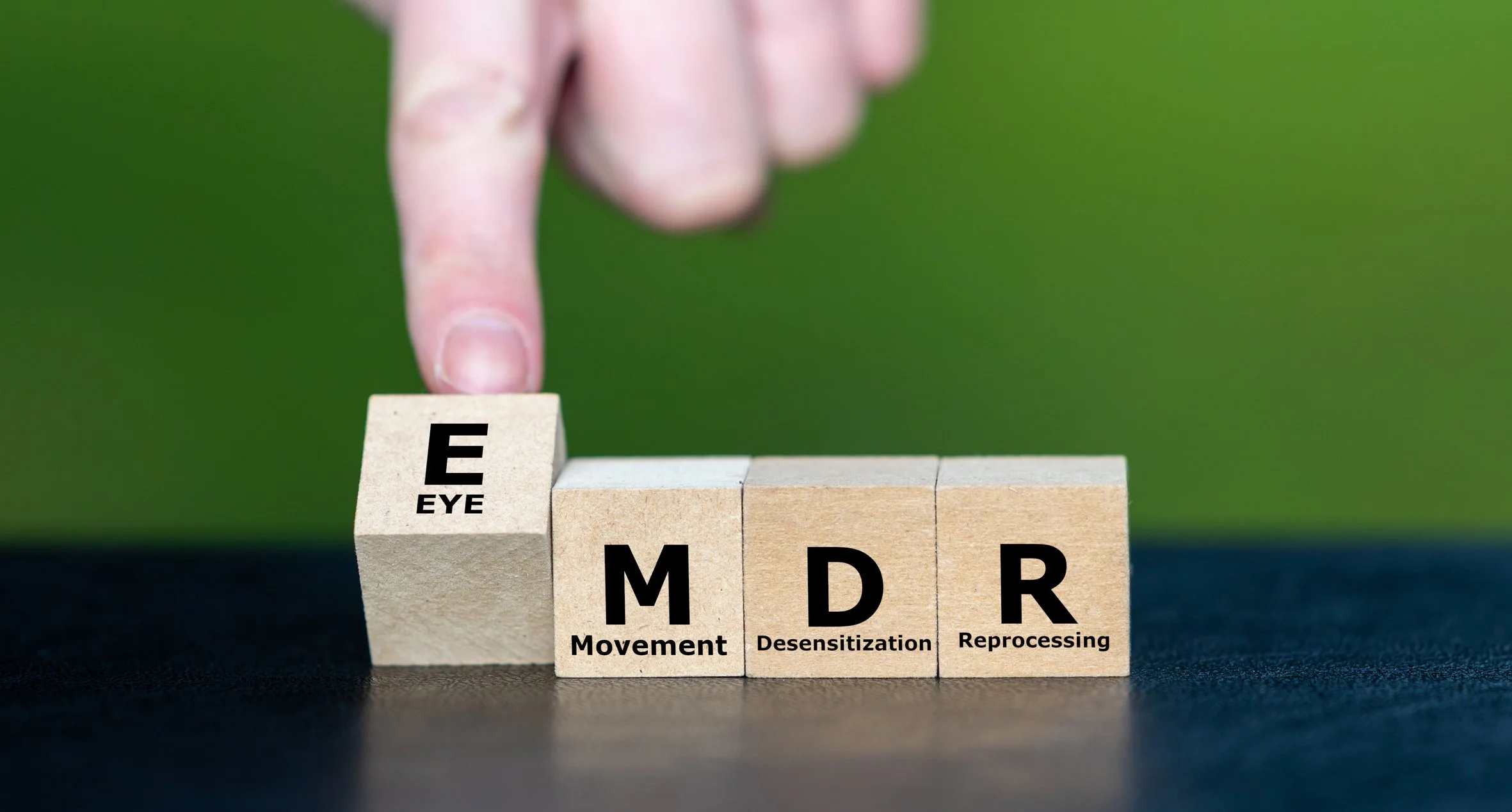
EMDR, short for Eye Movement Desensitization and Reprocessing, is an extensively researched, evidence-based psychotherapy recognized as an effective trauma treatment by the World Health Organization, the American Psychiatric Association, and the U.S. Departments of Veterans Affairs and Defense. The VA’s National Center for PTSD describes EMDR as one of the most effective treatments for PTSD.
Here’s the core idea. When something overwhelming happens, the brain sometimes stores that memory in a raw, unprocessed form, with the original images, emotions, and body sensations still attached. That’s why a sound, a tone of voice, or a situation at work can set off a reaction that feels far bigger than the moment in front of you. EMDR uses bilateral stimulation (guided eye movements, tapping, or alternating tones) while you briefly focus on a troubling memory. This helps your brain fully process the memory, so it loses its emotional charge and stops controlling you.
What Makes EMDR Different
You don't have to talk through every detail. Unlike traditional talk therapy, EMDR doesn't require you to describe your trauma at length. Many clients find that a relief.
It works with the body, not just the mind. EMDR addresses the physical, nervous-system side of trauma that insight alone can't reach.
Results are often faster. Many clients experience meaningful relief from specific memories in fewer sessions than talk therapy alone.
What EMDR Can Help With
EMDR is best known for treating PTSD and trauma, and it's also widely used for:
Single-incident trauma, such as an accident, assault, or sudden loss
Childhood and complex trauma, including emotional neglect or growing up in chaos
Anxiety and panic that seem to come out of nowhere
Relationship patterns rooted in past hurt, like people-pleasing, fear of abandonment, or choosing the same kind of partner
Grief that feels stuck
Performance anxiety and the pressure of high-stakes careers
Negative core beliefs, like "I'm not enough" or "I'm not safe"
Who I Work With
Many of my clients are capable, high-achieving adults. They’re professionals who look like they have it all together and are quietly carrying far too much underneath. You may have already done years of talk therapy. You understand your story. You just can't seem to stop living it out. EMDR is often the missing piece for people exactly like you.
Why Work With Me
I'm Ruth Alcantara-Zboinski, a Licensed Clinical Social Worker in New York, Connecticut, and Florida, and I've been providing EMDR therapy for more than 10 years. I'm also a Qualified Supervisor, which means I train and supervise other therapists working toward their clinical license. My practice is fully online, and your sessions happen wherever you feel most at ease. I'm in network with a limited number of insurance plans, and for other plans I make out-of-network care easier through Thrizer. Bilingual clients are welcome.
What Online EMDR Sessions Look Like
1. Getting to know you.
We start with your history, your goals, and what you want to feel different. Together we decide which memories or patterns to work on first.
2. Building stability first.
Before any memory work, I'll teach you tools to calm your nervous system, so you always have a way back to steady ground. We don't move forward until you feel ready.
3. Reprocessing.
You'll briefly bring a memory to mind while following bilateral stimulation on your screen or tapping on your own shoulders. You stay awake, aware, and in control the entire time, and you can pause whenever you need to.
4. Closing and checking in.
Every session ends with grounding, so you leave feeling settled. Each time we meet, we review what has shifted and adjust the plan.
Does Online EMDR Really Work?
Yes. Virtual EMDR follows the same structured protocol as in-person sessions, using on-screen eye movements or self-administered tapping. Research and clinical experience indicate that online EMDR can be as effective as in-office treatment, and many clients find it easier to open up from the comfort and privacy of their own space. All you need is a private room, a stable internet connection, and a laptop or desktop computer.
EMDR Therapy FAQs
How many EMDR sessions will I need?
It depends on what we're working on. A single upsetting event may resolve in a handful of sessions, while childhood or complex trauma usually takes longer. We'll talk about a realistic plan during your consultation.
Will I have to relive my trauma?
No. You'll bring a memory to mind briefly, but you won't need to describe it in detail or stay in it. The goal is to process it, not re-experience it.
Is EMDR hypnosis?
No. You are fully awake, aware, and in control throughout every session.
Is EMDR right for me?
EMDR works well for many people, but timing matters. If you're in active crisis, we'll focus on stabilization first. Your free consultation is a chance to talk through whether EMDR is the right fit now.
How much does EMDR therapy cost?
Standard 50-minute EMDR sessions are $205. Extended 90-minute EMDR intensives are $250, for clients who want to make faster progress. You can pay with your HSA or FSA, and you'll receive a Good Faith Estimate of your costs before we begin. See all fees on my Fees page.
Do you take insurance?
I'm in network with a limited number of insurance plans. For other plans, I'm an out-of-network provider and work with Thrizer, which lets you pay only your estimated after-reimbursement cost at the time of each session, instead of paying in full and waiting to be reimbursed. We can review your benefits, fees, and options during your free consultation.
Have more questions? See my full FAQ page or learn more about my background.
Written and reviewed by Ruth Alcantara-Zboinski, LCSW, Qualified Supervisor. Last updated October 2026.
Ready to Stop Carrying It Alone?
You don't have to keep managing the same reactions for the rest of your life. Schedule a free 15-minute consultation to see if online EMDR is right for you.